
Ian Randall Wilson
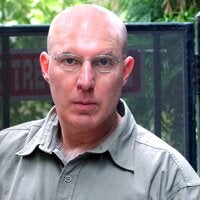
Ian Randall Wilson
Instructor Biography: Ian Randall Wilson, M.F.A., M.A., fiction writer and poet whose work has appeared in North American Review, The Gettysburg Review, Alaska Quarterly Review, and The Boston Literary Review, among many others. Mr. Wilson’s story collection, Hunger and Other Stories, and his novella Great Things Are Coming were published by Hollyridge Press. He is also an executive at a major motion picture studio.
Instructor Statement: “I can’t tell more than I know,” William Carlos Williams said. “I have lived, somehow, from day to day; and so I describe it, from day to day, as I have struggled to get a meaning from my failures and successes.” I write for that understanding: to figure out who I am, to create something I can order and arrange in what is often a confusing world of unrelated fragments. Sometimes those stories emerge as realistic fiction, sometimes as postmodern narratives, sometimes in a comic play of language, sometimes as commercial "upmarket" fiction. These are types of fiction that interest me, and I hope to expose my students to that range because I believe writers should read widely. We should read across genre and literary fiction, but include other discourses: poetry, memoir, history, philosophy, and writing from cultures and traditions not our own. Even watching films and television shows can help understand narrative, structure, characterization, and dialogue. Give me a thousand influences. They intensify the mind, enlarge our understanding of the world, and have the best effect on our writing. I come to the classroom with the conviction that everyone can be a writer, everyone has stories to tell, and every writer deserves the opportunity to discover how best to tell them. My role is not to prescribe a style, subject, genre, or worldview, but to help students find the fullest expression of their own intentions, wherever they are on their journey as writers. I offer an understanding of craft grounded in the possibilities of narrative: creating conflict, disrupting the routines and assumptions of characters' lives, and exploring how they struggle toward a new equilibrium. These are tools, not rules, and students are free to use, question, or reject them in service of their own artistic vision. Craft should be understood not as a fixed set of prescriptions but as an evolving body of conventions and possibilities that should serve the writer's vision not constrain it. In my teaching, I also draw on narrative theory to develop a common language for discussing fiction and its possibilities. We have a whole critical lexicon available to us, one that allows writers to engage more deeply with their own work and the work of others. It's also a great way to wow your friends. I believe that the diversity of backgrounds, experiences, and perspectives students bring to the classroom is one of its greatest resources. We write from our particular experience of the world, but we also imagine beyond it, and our words carry meanings and consequences beyond the page. In workshop, I encourage a critical dialogue that respects both the writer's intentions and the reader's experience, recognizing that we all read through the filters of our own histories, cultures, and assumptions. Unfamiliarity with a world or perspective is not necessarily a failure of the writing; it may instead be an invitation to read more attentively. Above all, I want students to leave my classes with a stronger command of their craft, a deeper engagement with fiction, and greater confidence in the value and possibilities of their own work, energized and encouraged, ready to meet the challenges of drafting and revision, but most important, with the certainty that they are writers.
Our Students Say it Best!
“Terrific instructor! Covered the material in the text, provided his own valuable insights into the writing process. But most important, his deadpan style was genuinely inspiring. No nonsense. He genuinely believes in writing and imparts a quiet intense love of the work to his students.” — Writers’ Program Student